Bangkok’s streets each carry their own identity, from royal heritage corridors and canal-side markets to creative districts and legendary food strips. This guide covers 9 of the most iconic walking streets in Bangkok worth putting on your list in 2026, with transport tips for each. Families and long-term residents looking for a well-connected base will find Bangkok Garden’s serviced apartments in Sathorn ideally positioned, with BTS access linking the property to every district in this guide.
Bangkok is one of those cities best understood street by street. Its neighborhoods each carry a distinct character shaped by centuries of trade, migration, and reinvention. The most famous streets in Bangkok span a remarkable range: royal boulevards built in the 1860s, canal-side weekend markets restored to international acclaim, and night food strips that have gone viral across Southeast Asia. Some are best explored over a lazy afternoon. Others come alive well past midnight. This guide covers 9 of the top walking streets in Bangkok worth adding to your 2026 itinerary, with transport notes for each and a look at why a serviced apartment in Sathorn puts every one of them within easy reach.
Khao San Road
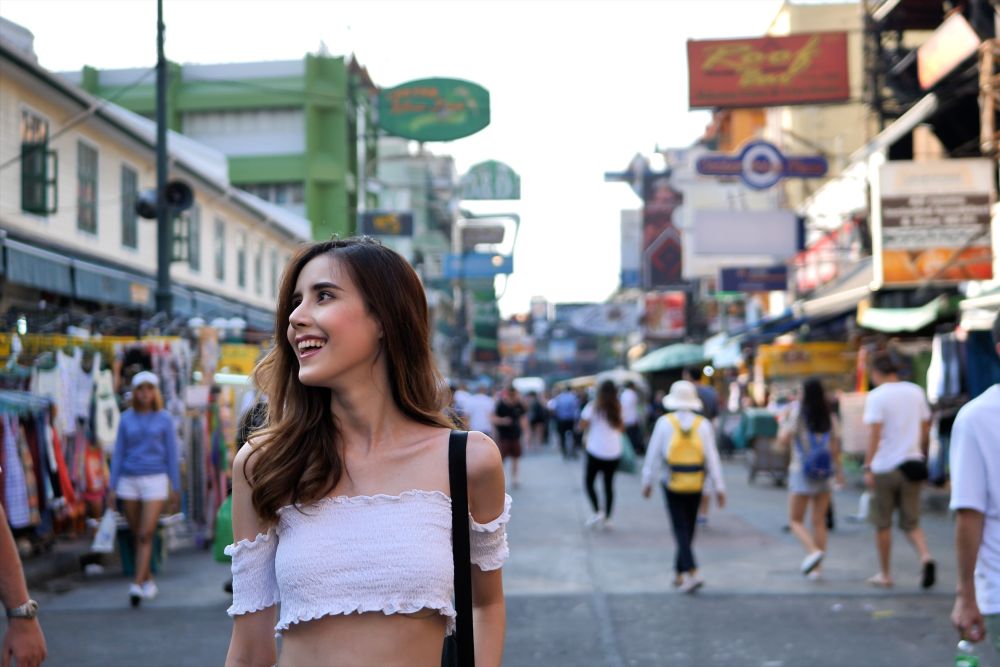
Khao San Road sits in the Banglamphu district and remains the most internationally recognized walking street in Bangkok. What started as a small rice market has spent decades evolving into the city’s definitive backpacker corridor. The street runs with a constant low-level energy during the day, with vendors selling clothing, accessories, and handmade goods alongside budget guesthouses and travel agencies.
By evening, the dynamic shifts completely. Open-air bars push their speakers toward the street, live bands set up at either end, and the mix of travelers from every corner of the world creates one of Bangkok’s most reliably lively atmospheres. Street food here ranges from pad thai and grilled skewers to more adventurous options for the curious. It is chaotic in the best possible way, and worth at least one evening visit regardless of where you are staying.
The closest MRT station is Sanam Chai, with a short taxi or tuk-tuk ride from there.
Ong Ang Walking Street (Khlong Ong Ang)
Ong Ang Walking Street runs along a historic canal in the old city, open on Fridays through Sundays from 4pm to 10pm. The canal itself dates back to 1783, established during the reign of King Rama I as part of Bangkok’s original city moat system. After years of neglect, the area was restored and reopened as a public walkway in 2018. The project went on to receive the 2020 Asian Townscape Award from UN-Habitat, recognizing its contribution to urban heritage conservation.
The atmosphere is relaxed and community-oriented. Street art murals line the canal walls, local buskers perform Thai folk music, and food vendors serve regional dishes at accessible prices. Families and couples tend to gravitate here over the weekend crowd of Khao San. Sam Yot MRT station is approximately 50 meters from the entrance, making it one of the easiest walking streets in Bangkokto reach by public transport.
Charoenkrung Road
Charoenkrung Road holds a significant place in Bangkok’s urban history. Constructed in the 1860s under King Rama IV, it was the city’s first paved road, originally built to serve the multicultural trading communities of Chinese, Muslim, and European merchants who had settled along the Chao Phraya River. For much of the twentieth century, it remained a quiet stretch of aging shophouses and riverside warehouses.
That changed with the emergence of Bangkok’s Creative District along its lower stretch. Warehouse 30, a repurposed complex of World War II-era warehouses, now hosts galleries, concept stores, and rotating creative exhibitions. The Thailand Creative and Design Center (TCDC) operates from the fully restored Grand Postal Building. Independent restaurants, rooftop bars, specialty coffee shops, and art studios occupy the surrounding shophouses. Several restaurants in the area have received Michelin recognition. Charoenkrung is one of the most famous streets in Bangkok for design and culture, and it rewards a slow, unhurried visit.
Sanam Chai Road
Sanam Chai Road runs through the Phra Nakhon District, connecting the Grand Palace area to the old city moat. It is one of Bangkok’s most historically dense streets, passing Wat Pho with its famous Reclining Buddha, Museum Siam, the elegant Saranrom Park, and several grand colonial-era government buildings that have been carefully preserved.
In recent years, boutique shops, art galleries, and cafes have begun operating from the restored heritage buildings along the road, adding a quieter, more contemplative energy to an already significant street. Sanam Chai MRT station, which opened in 2019 and is widely noted for its striking architectural design, serves the area directly. The nearby Pak Khlong Talad flower market, one of Bangkok’s most visually striking markets, is well worth combining into the same trip.
Yaowarat Road (Chinatown)
Yaowarat Road is the main artery of Bangkok’s Chinatown and one of the most atmospheric Bangkok night streets in all of Southeast Asia. The Chinese community has been established along this corridor for over 200 years, and the street reflects that layered history at every turn. During daylight hours, gold shops dominate the ground floors of densely packed shophouses, operating as they have for generations.
After dark, Yaowarat transforms. Neon signage blazes across the street, charcoal grills fire up, and vendors serving roasted duck, fresh oyster omelets, mango sticky rice, and grilled seafood attract long queues that stretch into the side lanes. Wat Traimit, housing the world’s largest solid gold Buddha statue at five and a half tons, is located at the eastern end of the road. Wat Mangkon MRT station delivers you directly into the heart of the district.
Banthat Thong Road
Banthat Thong Road sits near Chulalongkorn University and earned global attention in 2024 when Time Out ranked it the 14th coolest street in the world. The street has built its reputation almost entirely on food. Long-standing Thai-Chinese eateries have operated here for decades, and a newer wave of dessert shops, specialty cafes, and creative vendors has established itself alongside them, earning the street its informal nickname “Yaowarat 2.”
The most-discussed stop is Jeh O, where a bowl of Mama Oho noodles became a viral sensation and now draws consistent queues well into the night. Saneh Larb Koi is regarded as one of the city’s most reliable spots for Isan cuisine. Charcoal-grilled toast stalls and rotating pop-up vendors fill the rest of the strip. For food-focused visitors, Banthat Thong is one of the most rewarding Bangkok night streets to explore late. National Stadium BTS or Sam Yan MRT will get you there within a 10 to 15 minute walk.
Song Wat Road
Song Wat Road runs 1.2 kilometers along the riverside within Bangkok’s Chinatown district. Built by King Rama V in 1892, it originally functioned as a commercial trading hub serving the river port. For much of the twentieth century it sat largely dormant, its shophouses emptied of the trade that had once defined them.
The street’s transformation over the past decade has been widely recognized. A community-led initiative called “Made in Song Wat” helped grow the number of independent businesses operating from restored heritage buildings from 13 to over 60, spanning specialty coffee roasters, independent art galleries, vintage clothing stores, and artisan bakeries. Time Out named it one of the world’s coolest neighborhoods in 2023. It draws a crowd of creatives and curious travelers rather than sightseers, and the pace reflects that. Reach it via Wat Mangkon MRT or a short river boat ride to Ratchawong Pier.
Sukhumvit Soi 11
Sukhumvit Soi 11 is one of Bangkok’s most reliably active nightlife streets, running off the main Sukhumvit Road in a dense concentration of international restaurants, rooftop bars, clubs, and late-night street food stalls. The soi draws a consistent mix of tourists, expats, and Bangkok locals, which keeps the energy up throughout the week and peaks on Friday and Saturday nights.
The variety is part of the appeal. A craft cocktail bar, an open-air restaurant, and a dance club can sit within a single block of each other, making it easy to move between venues on foot over the course of an evening. As a Bangkok night street, Soi 11 is predictable in the best sense: well-lit, well-served, and easy to navigate. Nana BTS station sits at the entrance to the soi.
Silom Road and Patpong
Silom Road operates as Bangkok’s central financial district during business hours, home to major banks, corporate towers, and some of the city’s busiest lunch spots. Its after-dark identity is considerably different. Patpong Night Market, running along a narrow lane between Silom and Surawong Roads, has operated as one of Bangkok’s most visited night markets for decades, selling souvenirs, clothing, and street food to a broad mix of locals and international visitors.
Beyond the market, the Silom area is home to some of the city’s most awarded cocktail bars, a well-established and welcoming LGBT entertainment scene centered on Soi 4, and well-regarded restaurants along Convent Road. The contrast between the daytime business district and the evening entertainment corridor makes Silom one of the most famous streets in Bangkok for long-term residents and repeat visitors alike. Sala Daeng BTS and Silom MRT both serve the area directly.
Why Bangkok Garden is the ideal base for exploring these streets
Covering nine streets spread across multiple districts calls for a well-connected home base. Bangkok Garden’s serviced apartments in Sathorn sit within Bangkok’s CBD, close to Chong Nonsi BTS station, with a shuttle van service running residents to the station directly. The BTS Silom Line connects to Silom and Sukhumvit Soi 11 with no transfers, while MRT connections from nearby stations cover Chinatown, Sanam Chai Road, and Ong Ang Walking Street.
Apartments are available in 2, 3, and 3+1 bedroom configurations ranging from 105 to 240 sqm, as regular or fully serviced units. Fully serviced apartments include maid service three times per week, full linen changes, a complete set of kitchen utensils and tableware, Wi-Fi, Smart TV, washing machine, and welcome bathroom amenities on arrival. All apartments come furnished in a modern, contemporary style.
The grounds cover 3 acres of tropical gardens with two free-form swimming pools, a waterfall, jogging track, basketball court, football pitch, fitness center, sauna, jacuzzi, and a covered children’s playground. On-site restaurants, a coffee shop, and a convenience store handle everyday needs without leaving the complex. International schools including Aster International School, Shrewsbury International School, and King’s College International School Bangkok are all within a short distance, making the property a natural fit for expat families on minimum 6-month leases.
After an evening walking Yaowarat’s food stalls or spending a few hours in Song Wat’s creative district, returning to a spacious, well-equipped apartment set among greenery is a genuinely different experience from a standard hotel stay. Browse our available units and find the right fit for your stay at Bangkok Garden Apartments.
References:
- The World’s Coolest Streets. Retrieved April 7, 2026, from https://www.timeout.com/travel/coolest-streets-in-the-world
- Ong Ang Canal Walking Street wins 2020 Asian Townscape Award. Retrieved April 7, 2026, from https://www.nationthailand.com/thailand/general/30398176
Frequently Asked Questions About Walking Streets in Bangkok
Q: What is the most famous walking street in Bangkok?
A: Khao San Road is the most internationally recognized walking street in Bangkok, known for its backpacker atmosphere, street food, bars, and lively nightlife. Among locals and long-term residents, Yaowarat Road in Chinatown and Song Wat Road carry equal weight for their cultural significance and food credentials. The right answer depends on what kind of experience you are looking for: nightlife, heritage, food, or creativity.
Q: Are Bangkok walking streets safe to visit at night?
A: The major walking streets in Bangkok are generally safe to visit at night. Areas like Silom, Yaowarat, Sukhumvit Soi 11, and Khao San Road are well-lit, heavily trafficked, and have a visible security presence through most evening hours. The same common-sense precautions that apply anywhere apply here: keep your belongings secure in crowded market areas, and use the BTS or a Grab ride rather than unlicensed taxis for getting around after dark.
Q: Which Bangkok night street is best for street food?
A: Yaowarat Road in Chinatown is widely regarded as Bangkok’s best night street for food, with grilled seafood, oyster omelets, roasted duck, and mango sticky rice available from vendors who operate from early evening until well past midnight. Banthat Thong Road is a strong alternative, particularly for late-night eating, with the viral Jeh O noodle shop and a concentration of Isan and Thai-Chinese eateries. Ong Ang Walking Street works well on weekends for a more relaxed canal-side food experience.
Q: How do I reach Bangkok’s walking streets by public transport?
A: Bangkok’s BTS Skytrain and MRT subway network covers most of the streets in this guide. Sala Daeng BTS or Silom MRT serve Silom and Patpong. Nana BTS is the entry point for Sukhumvit Soi 11. Wat Mangkon MRT reaches both Yaowarat Road and Song Wat Road. Sam Yot MRT is approximately 50 meters from Ong Ang Walking Street. Sanam Chai MRT sits directly on Sanam Chai Road. Khao San Road is most conveniently reached by taxi or tuk-tuk from Sanam Chai MRT.

Bangkok Garden Apartment is a premier provider of fully furnished luxury serviced apartments in the Sathorn district of Bangkok CBD. Our world-class apartments are set within three acres of lush tropical grounds, offering a safe and relaxing environment for comfortable and convenient living. There are state-of-the-art facilities to suit every lifestyle, with a children’s playground, swimming pools, a jogging track, a basketball court, a football pitch, and a fitness center.